Key TakeAways
If you’re comparing portable infrared sauna kits, two brands that often come up are:
While both are positioned in the premium category, they differ significantly in:
- Heat performance,
- EMF approach,
- Build quality, and
- Overall use case.
These two brands kept coming up in my research as the premium options that don’t cut corners on safety or construction.
The price difference isn’t huge, but the temperature and technology differences absolutely are.
Sun Home Saunas hits 165-170°F with full-spectrum infrared and verified ultra-low EMF at 0.5 mG, while Radiant Saunas maxes out at 149°F with far-infrared only and a focus on toxin-free materials.
Every brand claims “low EMF” and “therapeutic heat with 3rd party testing”.
Some links may be affiliate links, meaning this site may earn commissions on purchases at no additional cost to you.
Table of Contents
Why These Two Brands Keep Coming Up
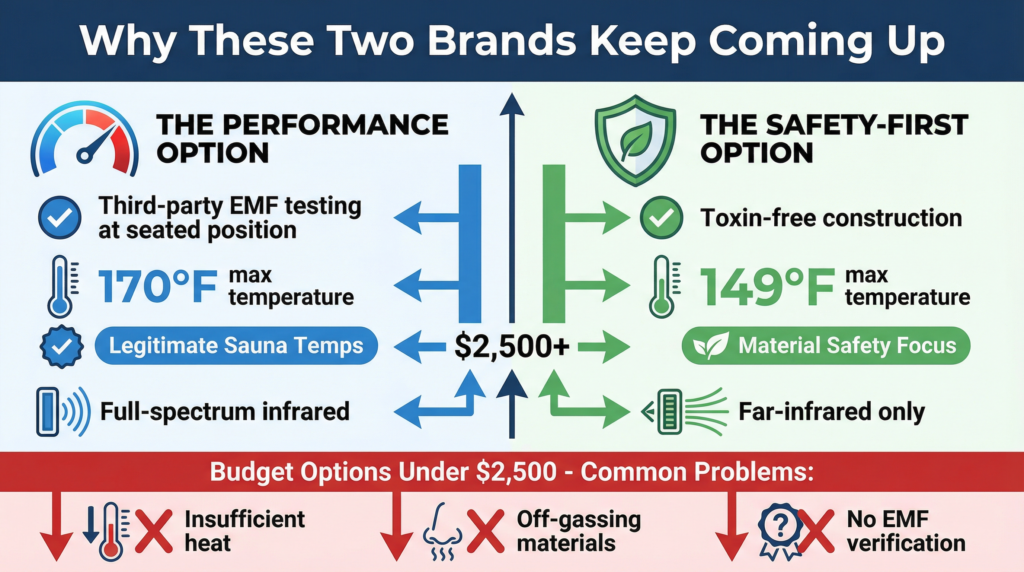
Sun Home positions itself as the performance option. They publish actual third-party EMF testing results measured at the seated position (not just at the heater panel where it’s easier to get low numbers).
Their units reach legitimate sauna temperatures, not just “warm room” temperatures.
Radiant Saunas goes a different route with heavy emphasis on material safety and toxin-free construction. They focus on far-infrared only instead of full-spectrum, and their max temp sits at 149°F compared to Sun Home’s 170°F.
Both brands cost way more than the budget options you’ll find under $2,500, but there’s a reason for that. The cheap units either don’t get hot enough to matter, use materials that off-gas weird smells, or have zero actual EMF verification beyond marketing claims.
Other Articles You May Be Interested Reading:
Temperature Specs That Actually Mean Something
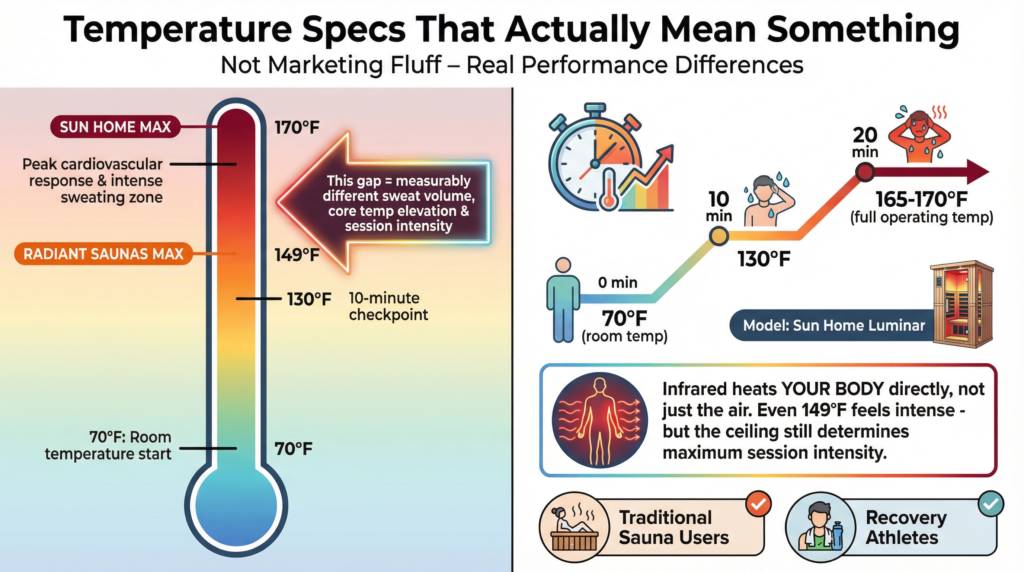
The temperature difference is the biggest thing here and it’s not just marketing fluff.
Sun Home’s models hit 165-170°F most operating temperature. That’s hot enough to trigger the cardiovascular response and intense sweating that most people want from sauna sessions.
Their Luminar model goes from room temp to 130°F in about 10 minutes, then reaches full operating temp around the 20-minute mark.
Radiant Saunas tops out at 149°F. That’s still therapeutic heat and it absolutely works for infrared therapy, but it’s a noticeably different experience than the higher temps.
The 21-degree gap translates to measurably different sweat volume, different core temperature elevation, and different intensity levels. If you’re used to traditional saunas or you want aggressive heat sessions for recovery, that difference matters a lot.
Infrared heat works differently than traditional steam saunas though. It heats your body directly instead of just heating the air around you, so even 149°F can feel pretty intense.
But the absolute ceiling still affects how hard you can push a session.
EMF Testing: Where the Verification Actually Matters
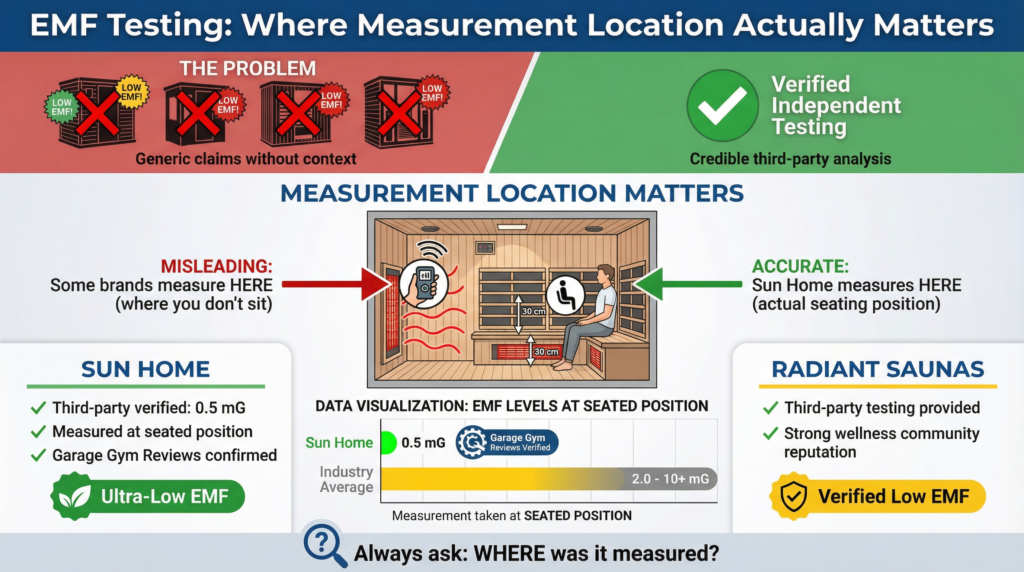
EMF (electromagnetic field) safety has become this weird marketing battleground where every brand claims “low EMF” but almost none of them publish independent testing.
Sun Home publishes third-party verified measurements at 0.5 mG taken at the actual seating positions where you’d sit during a session. That number is among the lowest in the industry and it’s verified by independent testing.
The seated-position measurement is critical because some brands measure EMF at the heater panel itself and publish those numbers even though you’re not sitting with your face pressed against the heater. Sun Home’s 0.5 mG reading at seated position is legitimately ultra-low.
Radiant Saunas markets itself as low EMF and their reputation in the toxin-free wellness community is solid and they provide 3rd party testing as well on their site.
Full-Spectrum vs Far-Infrared Only
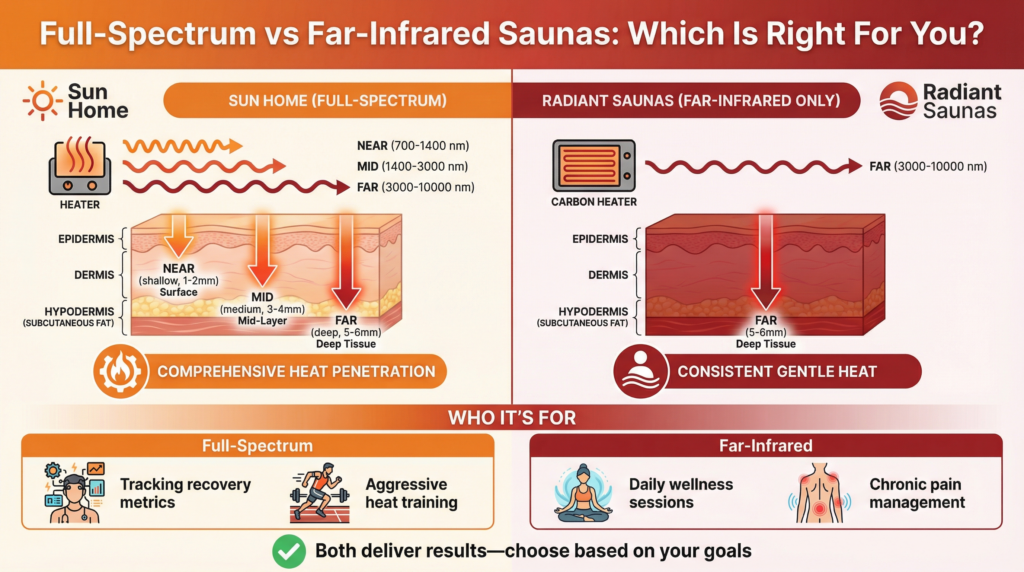
- Sun Home uses full-spectrum infrared, which means their heaters emit near, mid, and far infrared wavelengths simultaneously. Each wavelength penetrates skin at different depths and creates different biological effects.
- Radiant Saunas uses far-infrared only through carbon heaters. Far-infrared is the most common type in home saunas and it works well for consistent gentle heat, but it doesn’t have the wavelength diversity of full-spectrum systems.
Full-spectrum sounds better on paper, and it does provide more comprehensive heat penetration. The question is whether you actually need that or if far-infrared alone handles your goals fine.
- For biohackers tracking specific recovery metrics or athletes doing aggressive heat training, full-spectrum makes sense.
- For daily wellness sessions and chronic pain management, far-infrared-only systems like Radiant still deliver solid results.
Build Quality and Materials
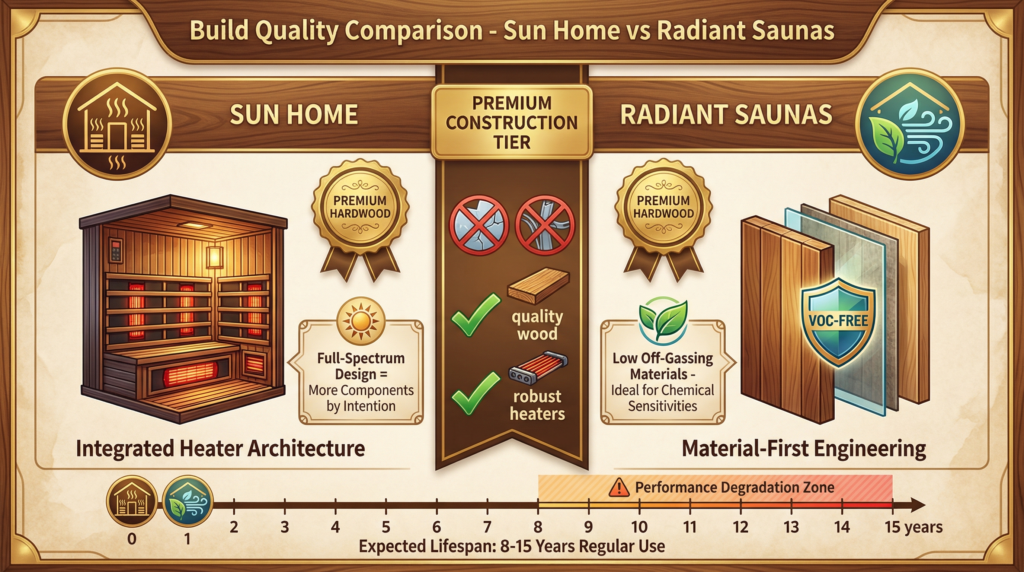
Both brands sit comfortably in the premium construction tier. Neither uses cheap plastics or weak heater elements that fail after a year.
- Sun Home builds with premium hardwood and combines their heater arrays into the cabinet design. The full-spectrum architecture means more heater components, but that’s intentional engineering as opposed to unnecessary complexity.
- Radiant Saunas also uses premium hardwood and specifically chooses materials to avoid off-gassing. If you have chemical sensitivities or you’re worried about long-term exposure to volatile organic compounds from cheaper materials, Radiant’s material-first approach provides targeted reassurance.
Durability expectations are similar for both brands. Premium construction typically means 8-15 years of regular use before heater performance starts degrading noticeably.
Other Articles You May Be Interested In Reading:
Portable Infrared Sauna Kits Comparison Table
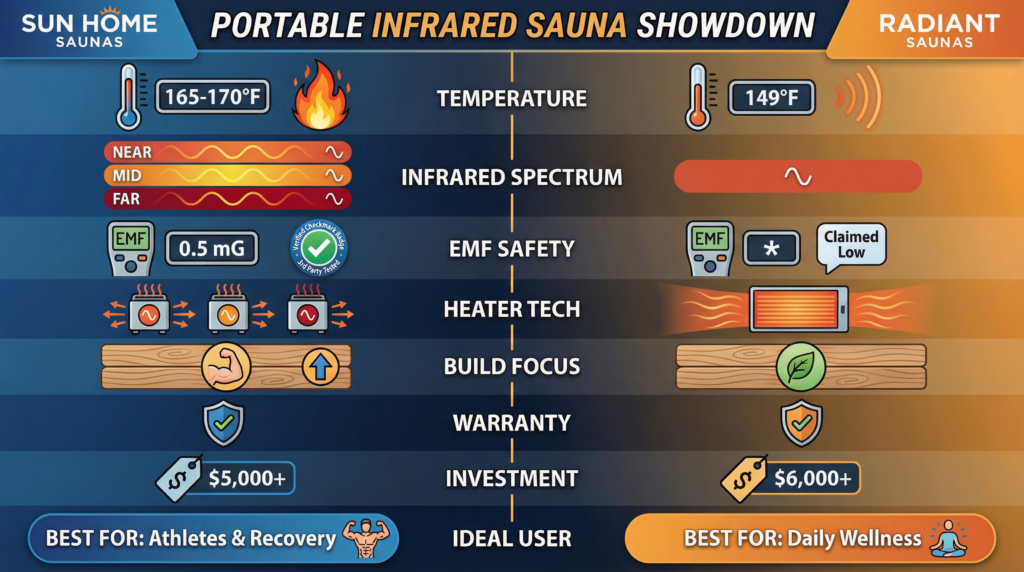
| Feature | Sun Home Saunas | Radiant Saunas |
|---|---|---|
| Maximum Temperature | 165-170°F | 149°F |
| Infrared Type | Full-spectrum (near, mid, far) | Far-infrared only |
| EMF Level (Verified) | 0.5 mG at seated positions (third-party tested) | Low EMF |
| Heater Design | Dedicated heaters for each wavelength | Carbon heaters, no separate near/mid components |
| Construction | Premium hardwood, performance-focused | Premium hardwood, toxin-free material focus |
| Warranty | Yes | Yes |
| Price Range | $5,000+ | $6000+ |
| Best For | Max heat, verified EMF data, recovery optimization | Toxin-free materials, gentle daily use, consistent warmth |
Apartment and Small Space Considerations
- Sun Home offers single-person models like the Equinox that fit apartment spaces while still hitting 165°F+. If you’re renting or living in a condo with limited space, this delivers genuine therapeutic heat without requiring a dedicated sauna room.
- Radiant Saunas has compact options too, though the lower max temperature makes it slightly less suitable if you specifically want aggressive heat therapy in a small footprint.
- Neither brand makes truly plug-and-play portable units. Both need dedicated electrical circuits (usually 240V) and some level of professional installation for permanent indoor placement.
- You can’t just plug these into a regular wall outlet and expect them to reach operating temperature.
If you’re renting, clarify installation requirements with your landlord before committing to either brand. Some apartments have the electrical infrastructure already, but many don’t.
Price and What You’re Actually Paying For
- Sun Home generally costs more ($6000+ for full-spectrum models). You’re paying for higher temperatures, full-spectrum infrared architecture, and independently verified EMF data at seated positions.
- Radiant Saunas typically runs slightly lower ($6000+ far infrared). You’re paying for material purity positioning, toxin-free construction, and consistent far-infrared therapy without the highest absolute temperature ceiling.
- Budget portable infrared sauna kits exist under $2,500 from brands like Dynamic Barcelona, but they sacrifice the safety engineering and material quality that Sun Home and Radiant deliver. The cheap units often use weaker heaters that barely reach 130°F, materials that smell weird when heated, or zero independent EMF verification.
Cost-per-session amortized over 10 years of regular use makes either premium brand economical compared to commercial sauna memberships. If you’d spend $100-200/month on sauna access elsewhere, a $6,000 home unit pays for itself in 3-5 years.
If you’re leaning toward verified performance data and most heat output, check out Sun Home’s current models here.
Real-World Use Cases
Recovery and Athletic Performance
Sun Home’s higher temperature ceiling and full-spectrum wavelengths make sense for serious athletes or biohackers tracking recovery metrics. The ability to hit 170°F combined with near, mid, and far infrared simultaneously creates conditions documented for cardiovascular adaptation and muscle recovery acceleration.
If you’re monitoring heart rate variability, tracking sleep quality changes, or optimizing post-workout recovery protocols, Sun Home’s temperature range and wavelength diversity provide measurable advantages over far-infrared-only systems.
Chronic Pain and Gentle Daily Use
Radiant Saunas’ 149°F ceiling and far-infrared focus work well for chronic pain management, arthritis relief, or daily wellness sessions where you want consistent therapeutic warmth without intense heat stress.
The toxin-free material positioning also appeals if you have chemical sensitivities and you’re using the sauna daily. Off-gassing from cheaper materials becomes more concerning with frequent use.
Apartment Living with Performance Needs
Sun Home’s Equinox model fits apartment constraints while delivering therapeutic heat above 160°F. If you have limited space but you want performance that matches full-size saunas, this handles both requirements.
Radiant works for apartments too, but the lower temperature means less aggressive heat response in a compact unit.
What People Get Wrong About Infrared Saunas
Heat Expectations
The most common mistake is assuming lower-temperature units don’t work. A Radiant unit at 149°F absolutely delivers therapeutic infrared heat.
The difference is intensity and amplitude of response, not whether it works at all.
If you’re used to traditional steam saunas reaching 180°F+, infrared heat at 149°F will feel different but still effective. Infrared heats your body directly instead of heating the air, so the delivery mechanism works differently than conventional saunas.
That said, the absolute temperature ceiling still affects how hard you can push a session and how intense the cardiovascular response becomes.
EMF Safety Claims
Buyers fixate on “low EMF” marketing without understanding what forms actual safety verification. A 0.5 mG reading at seated position (Sun Home’s verified measurement) represents safe exposure well below established health thresholds.
Unverified “low EMF” claims mean nothing without independent testing data measured where users actually sit, not marketing-friendly panel measurements taken right at the heater.
Before choosing a brand based on EMF concerns, demand third-party testing documentation that specifies measurement location.
Overpaying for Unused Features
Sun Home’s multi-person models and integrated red light therapy options increase cost significantly. If you primarily use the sauna solo, the Equinox addresses your needs at a lower price than the Luminar or Solstice models.
Similarly, Radiant’s full-featured models may include functionality you won’t use if you just want straightforward far-infrared heat. Match the feature set to your actual usage pattern to avoid premium overpayment.
For toxin-free material focus and gentler heat, Radiant Saunas’ current lineup is worth reviewing here.
Pros and Cons Breakdown
Sun Home Saunas Advantages
- Higher max temperature (165-170°F) for aggressive heat therapy. Full-spectrum infrared with near, mid, and far wavelengths integrated into the heater design.
- Independently verified ultra-low EMF at 0.5 mG measured at actual seated positions.
- Diverse product lineup from single-person to 5-person models. Advanced options like integrated red light therapy on certain models.
Sun Home Saunas Drawbacks
- Premium pricing reflects the high-performance positioning. Needs dedicated electrical circuits and more involved installation than plug-and-play choices.
- Potentially overkill if you just want gentle, steady-state heat therapy without most intensity options.
Radiant Saunas Advantages
- Strong toxin-free material reputation that appeals to chemically sensitive users. Far-infrared focus provides gentle, consistent heat suitable for daily use.
- Competitive pricing within the premium tier.
- Established reputation within wellness communities.
Radiant Saunas Drawbacks
- Maximum temperature of 149°F limits aggressive heat therapy potential. Far-infrared-only architecture lacks the wavelength diversity of full-spectrum competitors.
- Independent EMF verification data is less publicly visible compared to Sun Home’s third-party testing.
- Smaller product line limits customization options.
Which Brand Fits Your Situation Better
Sun Home makes sense if most heat output (165-170°F) aligns with your recovery or wellness protocol, if full-spectrum infrared matters to your therapy approach, if you want independently verified EMF data published at actual user positions, if you need flexibility across product types (single-person, multi-person, indoor, outdoor), or if performance optimization drives your decision more than material composition.
Radiant Saunas fits better if steady, consistent far-infrared heat without extreme temperature peaks matches your preference, if toxin-free material construction and avoiding off-gassing are primary concerns, if you use the sauna often and prefer gentler longer sessions over intense heat, if budget constraints favor a slightly lower price point while maintaining premium quality, or if material integrity positioning aligns with your broader wellness philosophy.
The realistic path forward is requesting free consultations from both brands. Describe your specific situation (apartment living, pain management, recovery optimization, sensitivity concerns) and their product specialists can clarify which model genuinely matches your constraints better than online research alone.
Both brands offer consultations, Sun Home’s contact page is here and Radiant’s is here.
FAQ’s
These Are The Most Common Questioned Asked About These Brands
Which brand is objectively better?
Neither is universally better. Both represent premium engineering with different priorities.
Sun Home improves for heat output and wavelength diversity.
Radiant Saunas improves for material purity and far-infrared consistency. The better choice depends on your specific priorities and use case.
Do these actually get hot enough to matter?
Sun Home absolutely gets hot enough (165-170°F) to trigger the cardiovascular response and intense sweating most people want from sauna sessions. Radiant’s 149°F ceiling is lower but still therapeutically effective for infrared heat penetration.
The difference is intensity level as opposed to whether it works at all.
Are ultra-low EMF levels necessary for safety?
Ultra-low EMF shielding (below 3 mG) represents responsible electrical engineering as opposed to an essential safety requirement. Standard sauna EMF exposure falls within safe ranges recognized by health authorities.
Which brand has better warranty coverage?
Both brands offer comparable premium-tier warranty terms with 6-10 year coverage on heaters and extended coverage on structural components. Sun Home explicitly advertises 6 years on heaters.
Radiant’s warranty terms are similar but vary by specific model.
Can you use these daily safely?
Both brands support daily sessions when used within manufacturer guidelines. Hydration, personal temperature tolerance, and session duration matter more than daily frequency.
Chronic health conditions or heat sensitivity warrant consultation with a healthcare provider before establishing daily sauna routines.
Final Thoughts on Sun Home vs Radiant
Sun Home Saunas and Radiant Saunas occupy different positions within the premium portable infrared sauna kits market.
Sun Home prioritizes performance maximization with higher temperatures, full-spectrum wavelength diversity, and independently verified EMF data. This supports intensive recovery protocols, biohacking applications, and users who want most heat output in a home unit.
Radiant Saunas prioritizes material integrity and gentle far-infrared consistency. This supports daily wellness routines, sensitivity-conscious users, and people who want consistent therapeutic warmth without extreme temperature intensity.
The 21-degree temperature gap and wavelength architecture differences represent real technical distinctions as opposed to marketing hyperbole. Your living situation, recovery goals, material sensitivities, and budget constraints decide which brand’s engineering approach solves your specific problem better.
For apartment dwellers seeking most heat output, Sun Home’s Equinox model delivers performance in constrained space. For daily users prioritizing toxin-free construction and steady warmth, Radiant Saunas provides genuine value without requiring the highest absolute temperature.
Both represent legitimate premium options. Your decision hinges on whether you’re optimizing for heat intensity or material composition, or ideally, confirming which brand’s specific model genuinely fits your electrical infrastructure and wellness philosophy.
Neither brand is overpriced relative to its engineering. Both sit fairly in the premium category where quality construction and verified claims justify the cost compared to budget alternatives that sacrifice safety features, material quality, or performance capability.
If You Still Are Can’t Figure Out What Portable Infrared Sauna Kit To Buy Take Our Portable Infrared Sauna Kit Buyers Tool Questionnaire!
Other Articles You May Be Interested In Reading:
This guide provides educational information for selecting portable infrared sauna kits. Some links may be affiliate links, meaning this site may earn commissions on purchases at no additional cost to you.
Disclaimer: The wellness benefits described are based on general research and user experiences. Individual results may vary as these are only opinions. Consult with a healthcare professional before beginning any new wellness routine, especially if you have pre-existing medical conditions, are pregnant, or take medications. Infrared sauna use is not intended to diagnose, treat, cure, or prevent any disease.