Quick Answer
So here’s the thing about portable infrared saunas, they actually work pretty well for what they’re designed to do.
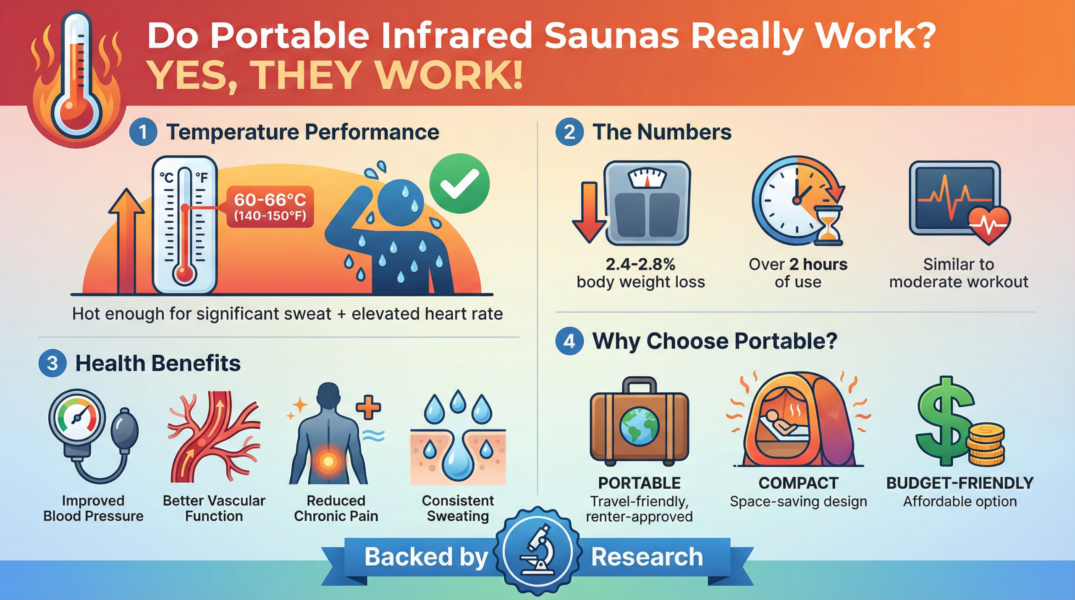
These units consistently hit temperatures around 60-66°C (that’s 140-150°F), which is hot enough to make you sweat significantly and raise your heart rate similar to a moderate workout. Recent research shows these portable models reliably cause people to lose about 2.4-2.8% of their body weight through sweating over roughly 2 hours of use.
The benefits go beyond just making you sweat though. Studies have documented improvements in blood pressure, how well your blood vessels function, and chronic pain symptoms when people use them regularly.
Here’s what makes them different from traditional saunas: They are portable for travel or apartment renters, compact if you need a space saving solution as they are tents or pods, and are budget friendly for budget conscious buyers.
Some are head-out design means you’re breathing room-temperature air instead of hot air, which honestly makes longer sessions way more tolerable. Others are more like a tent or pod and insulated.
The catch is that not all portable units reach these temperatures consistently and are not as efficient. Your results will depend heavily on the specific model’s heating capacity whether infrared or steam ( yes they come with steam as well) and how well it’s insulated.
Table of Contents
Or Continue to find out how and why they work so well!
Understanding the Question
When you ask “do portable infrared saunas really work?” you’re probably wondering two things: Do these compact fold-up units actually generate enough heat to provide real health benefits, or are they just expensive tent-shaped placebos?
I get the skepticism. Portable infrared saunas cost anywhere from $200 to $2,000, they fold up like camping gear, and they plug into regular wall outlets.
Traditional saunas both steam and infrared need dedicated rooms, professional installation, and dedicated 115 orl 220-volt electrical systems.
But here’s something interesting, research facilities have started using portable infrared saunas in their studies specifically because they need cost-effective ways to study heat therapy without building expensive environmental chambers. That tells you something important right there.
Scientists trust these units enough to base published research on them.
How These Things Actually Work
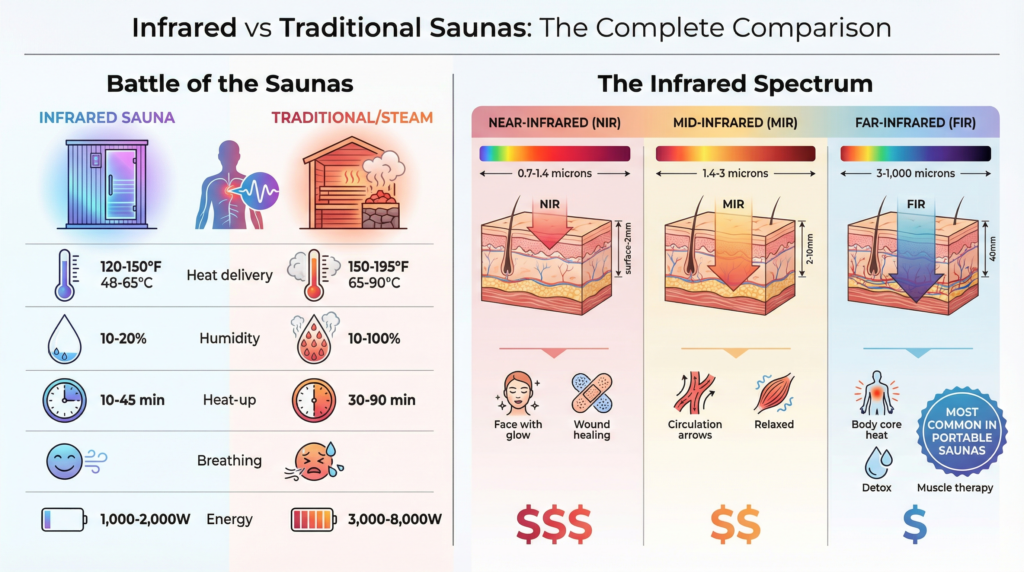
Portable infrared saunas use carbon fiber heating panels that emit infrared radiation at specific wavelengths. These waves penetrate your skin more deeply than regular hot air, heating your body directly instead of warming the air around you first.
Standard portable units operate at 60-66°C compared to traditional saunas that reach 85°C or higher. The lower air temperature combined with direct infrared penetration means you sweat more at temperatures that feel less oppressive.
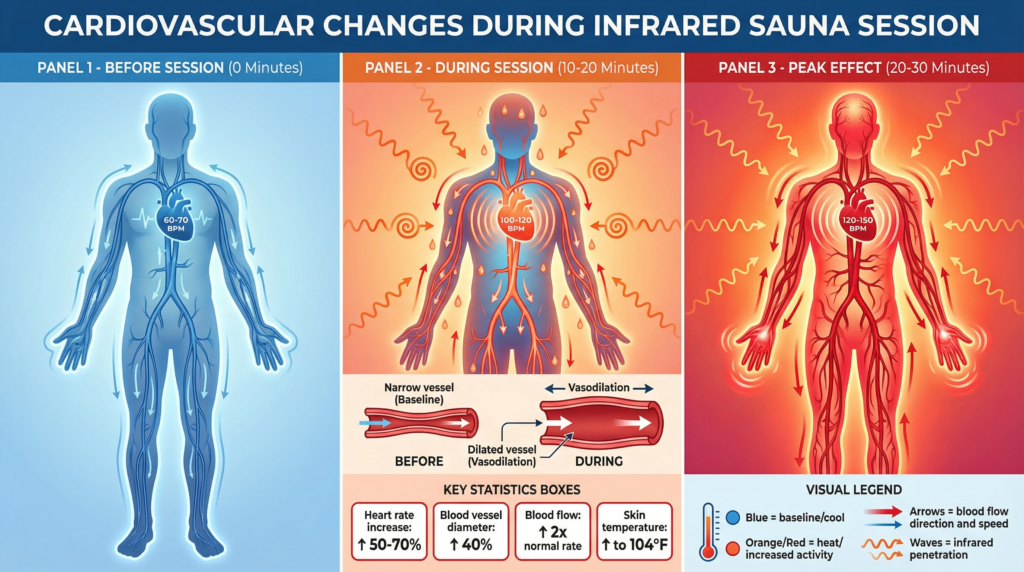
Your body responds to this heat stress the same way it responds to moderate exercise. Your heart rate increases, your blood vessels dilate, and you start sweating significantly. The cardiovascular demand mimics walking at a steady pace.
The mechanics matter because they explain why these portable units work despite their compact construction. The infrared panels deliver focused heat to your body instead of trying to heat an entire room to sauna temperatures.
🔥 Infrared Sauna Calculator
Calculate your estimated calories burned and sweat rate during infrared sauna sessions. Enter your weight and session duration to get personalized estimates for your wellness routine.
What the Research Actually Shows
Sweat Production and Consistency
A 2025 study from the University of Central Florida tested whether portable infrared saunas could reliably achieve specific dehydration targets across many sessions. Participants used a portable unit set at 66°C, alternating 20-minute exposures with 5-minute rest periods.
The results showed excellent consistency. Participants lost 2.4-2.8% of body weight through sweating in an average of 120 minutes, with reliability measurements under 5%.
This level of consistency matches what researchers see with expensive climate-controlled chambers.
Translation: The units produce predictable, repeatable results when used under controlled conditions.
Heart Health Benefits
Multiple studies show cardiovascular improvements from regular infrared sauna use. A randomized controlled trial found that patients with congestive heart failure who used infrared saunas for 14 days showed significantly fewer heart arrhythmias compared to untreated controls.
A meta-analysis confirmed that heat therapy reduces blood pressure and improves the ability of blood vessels to expand and contract properly. Another study documented decreased systolic blood pressure and reduced oxidative stress markers after just two weeks of regular sessions.
These benefits appear connected to improved endothelial function (that's the inner lining of your blood vessels). Research showed that people with coronary risk factors experienced improved vascular function, decreased blood pressure, and lower fasting glucose levels after 14 days of infrared sauna use.
Pain Relief and Recovery
A randomized controlled trial examined chronic pain patients using infrared saunas for 28 days. Results showed an increased likelihood of returning to work and trends toward decreased pain levels and reduced anger.
Smaller studies found that infrared heat helps reduce muscle soreness following workouts. Research documented improvements in short-term pain and stiffness for people with rheumatoid arthritis.
The mechanism probably involves increased blood flow to affected areas, reduced muscle tension, and temporary pain modulation. Heat therapy has been a standard treatment approach for centuries because it genuinely provides relief for many conditions.
Mental Health Effects
A clinical trial at UCSF found that 86.2% of participants experienced meaningful reductions in depression symptoms after infrared heat treatment, regardless of the specific heating level used. This suggests heat exposure itself provides therapeutic value beyond placebo effects.
Research on chronic fatigue syndrome showed improvements in fatigue, pain, sleep quality, and low-grade fever symptoms after 35 days of regular sessions.
If you're curious about trying this for yourself, checking out some of the better-reviewed portable infrared saunas might be worth your time. Just manage your expectations and understand what you're getting into.
Key Factors That Determine Effectiveness
Temperature Consistency
The portable unit needs to maintain 60-66°C consistently throughout your session. Cheaper models with inadequate insulation or weak heating elements struggle to reach or sustain these temperatures, especially in cooler rooms.
Research protocols specifically watch internal sauna temperature throughout sessions because temperature drops directly impact results. Units that lose significant heat when you enter or exit will need longer sessions to achieve the same benefits.
Session Duration and Frequency
Studies showing measurable benefits typically used 15-30 minute sessions, 4-7 times per week, for at least 2 weeks. Single sessions provide temporary benefits like increased circulation and relaxation, but consistent use produces the cardiovascular and pain-reducing effects documented in research.
The average time to achieve therapeutic sweating levels is about 120 minutes total in the sauna, though this includes rest periods. Most people split this into many shorter sessions instead of one extended exposure.
Individual Tolerance and Response
Research documented that 13-14% of scheduled sauna intervals were shortened because participants exceeded safe core temperatures or experienced discomfort. Some people naturally tolerate heat better than others.
This variability means you need to start conservatively and adjust based on your response. The units work, but your ideal session length and frequency may differ from published protocols.
Real-World Limitations You Should Know About
Space and Setup Requirements
Portable units still need dedicated floor space (typically 3x3 feet) and need to stay set up if you plan to use them regularly. Constantly folding and unfolding a sauna becomes a deterrent to consistent use.
The units use standard 120-volt outlets, which is convenient. But you need adequate clearance around the sauna for ventilation and safe operation.
Cramped spaces defeat the "portable" advantage.
Temperature Recovery Time
Research protocols alternated between two saunas because opening the zipper to enter or exit causes significant temperature loss. The unit needs time to reheat between uses.
If you live alone and plan single daily sessions, this won't matter much. But families wanting back-to-back sessions will face 15-30 minute waits between users while the sauna recovers temperature.
Comfort and Tolerability
Three participants in the University of Central Florida study withdrew, with one specifically citing discomfort with heat exposure. The head-out design helps (you breathe room-temperature air), but sitting in 66°C heat for extended periods still challenges some people.
Heat exposure interventions commonly cause fatigue, headaches, and light-headedness. These effects are temporary and manageable with proper hydration, but they exist.
Comparing different portable infrared sauna models based on heating capacity and insulation quality can help you find one that works better for your tolerance level.
What Portable Infrared Saunas Don't Do
Weight Loss Claims
You will lose 2-3 pounds per session through sweating, but this is water weight that returns as soon as you rehydrate. One small study found that infrared sauna use during calorie restriction might affect some hormonal responses to fat loss, but this doesn't translate to accelerated fat loss.
The units provide cardiovascular benefits similar to moderate exercise, but they don't replace actual physical activity for weight management.
Cholesterol Reduction
Research provides consistent evidence to refute claims regarding cholesterol reduction with infrared saunas. If vendors advertise cholesterol benefits, they're either misinterpreting limited data or making unsupported claims.
Detoxification
The sweating does eliminate trace amounts of various compounds, but your liver and kidneys handle the heavy lifting for detoxification. No evidence suggests infrared saunas enhance your body's natural detoxification processes beyond what regular sweating accomplishes.
Other Articles You May Be Interest In Reading:
- Are Portable Infrared Sauna Kits Worthwhile? Pros, Cons, and Key Considerations
- Top 5 Portable Infrared Sauna Kits for Home Use in 2026
- Solstice Portable Infrared Sauna vs Equinox 2-Person Portable Sauna: Which is Better?
- SLISAU35BK Portable Steam Home Spa vs Full Size Portable Infrared Sauna?
- Portable Infrared Sauna Kits (2026): Sun Home Saunas vs. Radiant Health Saunas
- Best Infrared Sauna Blankets: Reviews & Comparison (2026)
- Portable Infrared Sauna for Home: Best Compact & Lightweight Options for Small Spaces (2026)
- Comparing Budget vs. Premium Portable Infrared Sauna Kits: What You Get
- Best Infrared Sauna Blanket for Detox (2026): Top Picks for Home Use
- Best Low EMF Sauna Blanket (2026): Safe Picks That Actually Work
- Sauna Accessories
Who Benefits Most From Portable Units
People With Limited Mobility
The cardiovascular demand of infrared sauna use might benefit people who cannot exercise because of osteoarthritis, respiratory problems, or cardiovascular conditions. You get some cardiovascular stimulus without joint impact or exertion.
This doesn't mean saunas replace exercise or medical treatment. But they provide an option for people with genuine mobility restrictions.
Chronic Pain Sufferers
The evidence for pain reduction shows enough promise that it warrants consideration. Infrared heat penetrates deeper than surface heat packs, potentially reaching affected tissues more effectively.
The relatively low cost and home accessibility of portable units makes them reasonable to try if other pain management approaches have disappointed.
Renters and Apartment Dwellers
Traditional sauna installation needs permanent construction that landlords typically ban. Portable units give you access to regular heat therapy without modifying your living space.
The ability to fold and store the unit means you can theoretically take it with you when moving, though frequent disassembly and reassembly gets old quickly.
Making an Informed Purchase Decision
Essential Features to Look For
Quality units include heating panels that maintain 60-66°C consistently, adequate insulation (multiple layers, not single-wall construction), external temperature displays so you can watch conditions without opening the unit, sturdy frames that won't collapse during use, and machine-washable interior liners.
Red Flags to Avoid
Be skeptical of units that cost under $100 (insufficient heating capacity for therapeutic benefits), make specific disease treatment claims, emphasize "zero EMF" as the primary selling point (research units work fine with normal EMF levels), or lack temperature monitoring capabilities.
Realistic Expectations
Plan for a 4-8 week trial period to assess whether the unit delivers noticeable benefits for your specific situation. Research shows measurable effects start appearing after 2 weeks of regular use, but person response varies.
Budget for the ongoing electricity cost (typically $0.50-$1.50 per session depending on local rates). Consider the time commitment: 30-40 minutes per session including setup, use, and cooldown.
Expert Perspective on the Question
Researchers now use portable infrared saunas as intervention tools specifically because they provide reliable, repeatable heat exposure without the expense of environmental chambers. This practical validation carries more weight than marketing testimonials.
A study published in Canadian Family Physician found that there is only moderate evidence to suggest that infrared saunas may help manage congestive heart failure and regulate blood pressure. Additionally, some studies provide reasonable support for their use in alleviating chronic pain.
This cautious endorsement reflects appropriate scientific skepticism while acknowledging genuine therapeutic potential. The units work within specific contexts for specific conditions, not as cure-alls for every health concern.
The Bottom Line on Whether They Work
Portable infrared saunas accomplish their core function: generating enough heat to induce therapeutic sweating and cardiovascular response comparable to moderate exercise. Research shows these effects are consistent and measurable when units maintain 60-66°C temperatures.
The documented benefits include improved blood pressure, enhanced vascular function, and reduced chronic pain symptoms with regular use over several weeks. These aren't dramatic transformations, but they represent genuine physiological changes.
The question isn't really whether portable infrared saunas work. The evidence confirms they do.The better question is whether the specific benefits matter enough to justify the cost, space, and time commitment for your person situation.
Someone dealing with chronic pain or cardiovascular risk factors who cannot tolerate traditional exercise will find different value than someone looking for general wellness enhancement. The units deliver measurable results, you need to determine if those particular results align with your goals.
If this sounds like something that could work for your situation, exploring some detailed reviews and specifications for different models might help you figure out which features matter most for your needs.
Additional Considerations Before You Start
Safety Monitoring
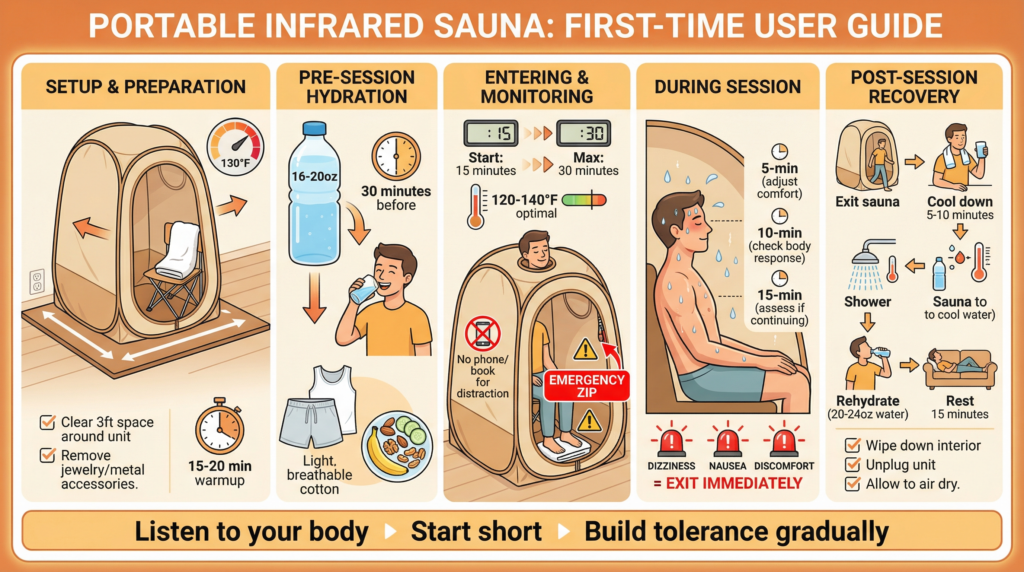
Research protocols watch core body temperature and remove participants when readings exceed 38.5°C. While portable units include safety features, you should listen to your body's signals and end sessions if you feel dizzy, nauseous, or excessively uncomfortable.
Proper hydration before, during, and after sessions is essential. Dehydration of 2-3% body weight needs replacing about 1.5-2 liters of fluid.
Medical Conditions
People with cardiovascular disease, uncontrolled hypertension, or heat sensitivity should ask healthcare providers before starting regular sauna use. The cardiovascular demand, while moderate, still represents a physiological challenge.
Pregnant women should avoid sauna use because of potential risks from elevated core temperature. Anyone taking medications that affect thermoregulation or hydration needs medical guidance.
Maintenance and Longevity
Portable infrared saunas need regular cleaning to manage sweat buildup and prevent odors. The carbon heating panels typically last 5,000+ hours, but fabric components and zippers may wear out sooner with frequent use.
Expect 3-5 years of regular use from quality models before needing replacement or significant repairs. This lifespan calculation factors into the cost-benefit analysis.
Frequently Asked Questions
How long does it take to see results from a portable infrared sauna?
Research shows measurable cardiovascular changes after 14 days of regular use (4-5 sessions per week). Pain reduction effects may take longer, with studies using 28-day protocols showing the clearest benefits.
Single sessions provide immediate temporary effects like improved circulation and relaxation, but sustained benefits need consistent use over several weeks.
Can portable infrared saunas help with fat loss?
You will lose 2-3 pounds per session through sweating, but this is water weight that returns with rehydration. The units provide cardiovascular benefits similar to walking, but they don't replace actual exercise for fat loss or weight management.
One study suggested potential hormonal effects during calorie restriction, but the evidence is too limited to draw firm conclusions.
Are portable infrared saunas safe for daily use?
Research participants used saunas 4-7 times per week without adverse events. The key is proper hydration and monitoring your person response.
Some people tolerate daily heat exposure easily, while others need rest days. Start with 3-4 sessions weekly and adjust based on how you feel.
Do cheaper portable infrared saunas work as well as expensive models?
The critical factor is whether the unit maintains 60-66°C consistently throughout your session. Cheaper models often have inadequate insulation or weak heating elements that fail to reach or sustain therapeutic temperatures.
Research-grade results need research-quality heat output, which typically means spending at least $400-500 for a functional unit.
How much does it cost to run a portable infrared sauna?
Most units use 1,000-1,500 watts during operation. At average US electricity rates ($0.13 per kWh), a 30-minute session costs about $0.25-0.50.
Monthly costs for 5 sessions per week average $5-10, which is negligible compared to the initial purchase price.
Can infrared saunas reduce inflammation?
Heat therapy has documented anti-inflammatory effects through various mechanisms including improved circulation and reduced oxidative stress markers. However, the research specifically measuring inflammation biomarkers with portable infrared saunas remains limited.
The cardiovascular benefits and pain reduction effects suggest anti-inflammatory activity, but more targeted research would strengthen these claims.
This article is for informational purposes only and does not constitute medical advice. Consult with a healthcare provider before starting any new wellness routine, especially if you have pre-existing health conditions.