Table of Contents
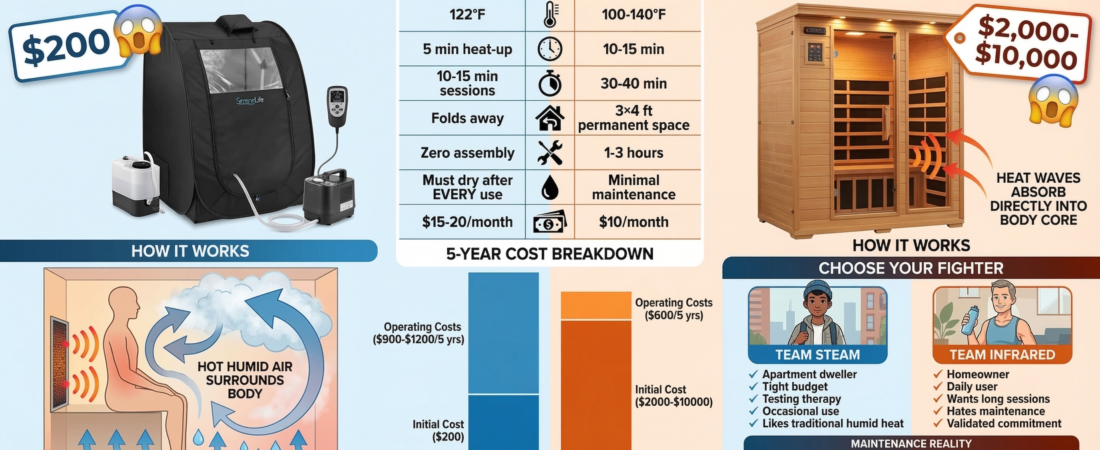
So I got pretty deep into researching portable saunas because I saw SLISAU35BK Portable Steam Home Spa vs Full Size Portable Infrared Sauna recently in my infrared sauna research.
This intrigued me because honestly, the whole recovery and wellness thing has gotten expensive and complicated.
You look at installing a traditional sauna and it’s like, yeah cool, let me just drop $20k and renovate my bathroom real quick.
Some links may be affiliate links, meaning this site may earn commissions on purchases at no additional cost to you.
The SereneLife SLISAU35BK keeps popping up as this super affordable option under$200, while full-size infrared units are sitting in that $2,000 to $10,000 range. That’s a massive gap.
Big enough that I wanted to actually break down what you’re getting (or giving up) at each price point.
This comparison isn’t about which one is “better” in some abstract way. It’s about which one actually works for your situation, your space, and what you’re trying to get out of regular heat exposure.
Overview: Steam vs Infrared Actually Works Differently
The first thing that matters is that these aren’t just two versions of the same thing at different price points.
They work through completely different mechanisms. So lets set the record straight.
**Steam saunas** (like the SereneLife SLISAU35BK) heat water to create steam, and that hot humid air heats your body from the outside. You feel hot immediately because you’re sitting in what’s basically a hot humid tent.
The SereneLife hits temperatures up to 122°F with its 1600-watt heating element and the model SLISAU35BK IS NOT INFRARED. Serene life does make infrared units but it’s not the SLISAU35BK unit. It is steam only.
On the flip side, **Infrared saunas** don’t heat the air much at all. They use infrared heaters that emit radiation (the safe kind, like sunlight) that passes through the air and directly heats your body tissues.
The air stays cooler, usually 115-135°F, but your core temperature rises because your body is absorbing that infrared energy.
So steam feels hot instantly and you start sweating fast. Infrared takes a few minutes to build up but then delivers what people describe as a deeper, more intense sweat from your core temperature rising.
That basic difference explains pretty much everything else about how they perform and who they work for.
Feature Comparison: What You Actually Get
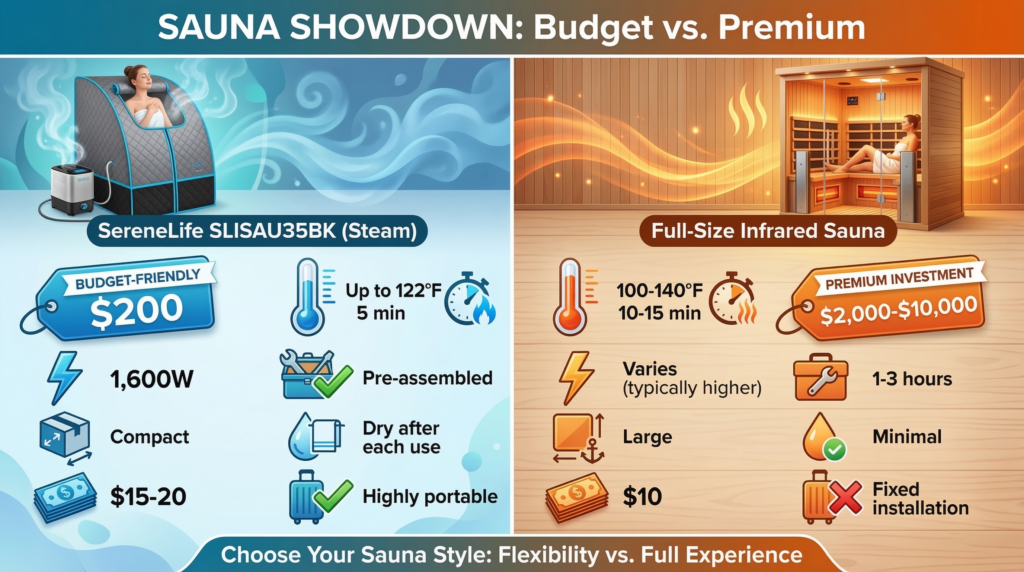
Let me just lay out the specs side by side because the differences are pretty significant.
| Feature | SereneLife SLISAU35BK Steam | Full-Size Infrared Sauna |
|---|---|---|
| Price | under $200 | $2,000–$10,000 |
| Temperature Range | Up to 122°F | 100–140°F |
| Heat-Up Time | 5 minutes | 10–15 minutes |
| Typical Session Length | 10–15 minutes | 30–40 minutes |
| Power Output | 1,600 watts | Varies (typically higher) |
| Assembly Required | None (pre-assembled) | 1–3 hours with basic tools |
| Space Required | Compact, folds away | Dedicated floor space needed |
| Maintenance | Must dry after every use | Minimal (dry environment) |
| Monthly Running Cost | ~$15-20 | ~$10 |
| Portability | Highly portable | Fixed installation |
The SereneLife comes as a complete package with the waterproof insulated fabric tent, a foldable chair, control pad with nine heat settings, and a foot heating pad. You can set the timer up to 60 minutes though realistically most people max out around 15 minutes because the heat gets pretty intense.
Full-size infrared saunas are actual wooden cabins with built-in infrared heaters. They either arrive pre-built or you gather them with basic tools (think ikea furniture but bigger).
Once they’re set up, they just plug into a regular outlet.
Setup Reality
The SereneLife wins here by a mile. You literally unbox it, fill the water reservoir, plug it in, and you’re heating up in under 5 minutes.
No assembly, no tools, nothing.
That simplicity matters a lot if you live in an apartment or rental where you can’t install permanent fixtures.
Infrared saunas need 1-3 hours of assembly time with two people and basic hand tools. It’s not complicated but you’re committing that space permanently.
Once it’s built, you’re not moving it around or packing it away.
check current prices on the SereneLife SLISAU35BK here
Performance Analysis: How They Actually Feel
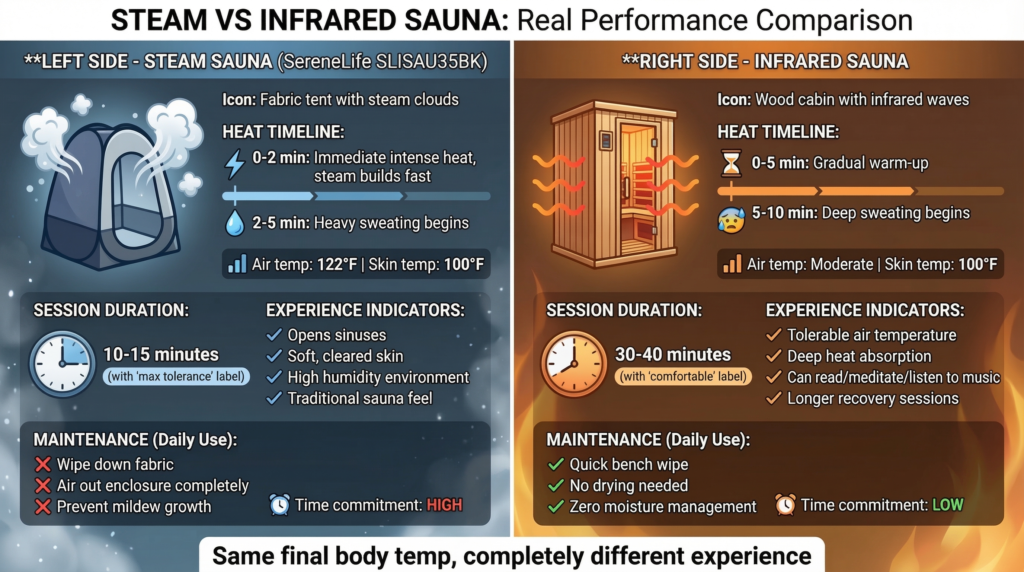
Specs only tell you so much. What actually happens when you use these things regularly is pretty different.
Steam Sauna Performance (SereneLife SLISAU35BK)
You feel the heat the second you zip yourself in. The steam builds fast and your skin temperature climbs quickly. Testing showed the air temperature hits around 122°F with skin temperature reaching about 100°F by the end of a session.
You start sweating within the first couple minutes. It’s that immediate, intense surface heat that feels like a traditional sauna experience.
The high humidity opens your sinuses and makes your skin feel different afterward, kind of soft and cleared out. Some people really like that moisture-rich environment for respiratory comfort.
But here’s the annoying part that nobody mentions until you own one: the moisture. After every single session, that fabric enclosure is soaked. You have to open it up, air it out, wipe it down, and make sure it dries completely or you’ll get mildew growing in there.
If you use it daily, that drying routine becomes a real chore. Not a dealbreaker necessarily, but it’s something you do every single time.
Sessions max out around 10-15 minutes because the heat is pretty intense. You can set the timer for 60 minutes but most people tap out well before that.
Infrared Sauna Performance
Infrared takes a few minutes to build intensity. You don’t feel blasted with heat immediately.
But once your body starts absorbing that infrared radiation, the sweating kicks in and it comes from deeper.
Testing showed similar final body temperatures (around 100°F) but the path to get there feels different. The air stays more tolerable so you can sit in there for 30-40 minutes comfortably.
That longer session time matters if you’re trying to use heat exposure as a regular recovery tool. You can read, listen to music, meditate, whatever.
You’re not just enduring intense heat for 15 minutes and bailing out.
The dry environment means zero moisture management afterward. Your body sweats but the wood cabin doesn’t trap humidity.
You wipe down the bench if needed and that’s it.
For regular use, that convenience difference adds up significantly.
Recovery and Therapeutic Differences
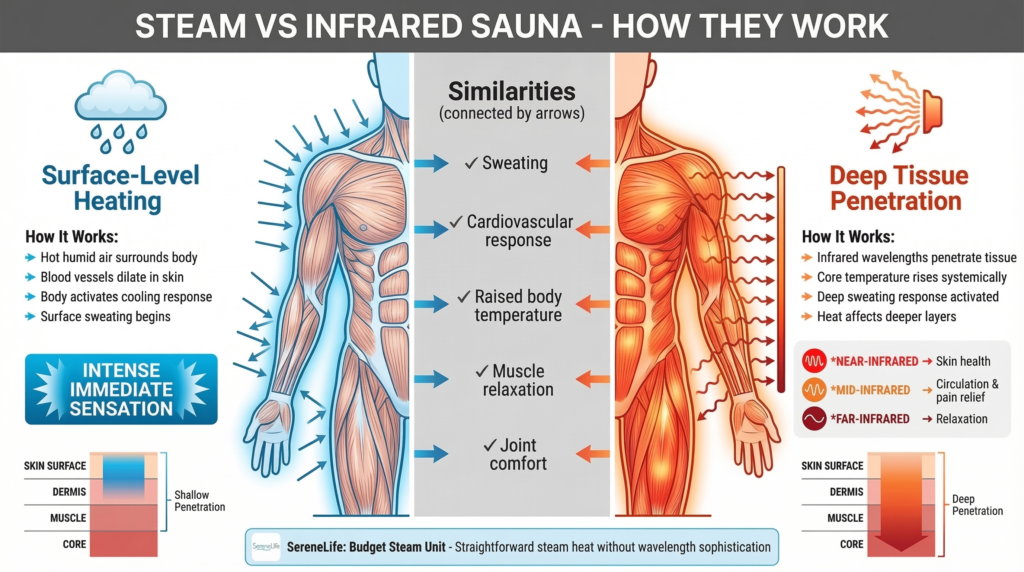
Both produce sweating and the cardiovascular response that comes with raising your body temperature. But they work through different pathways.
Steam creates surface-level sweating from hot humid air. Your blood vessels dilate in your skin, your body works to cool itself, and you sweat.
The immediate sensory experience is intense.
Infrared raises your core temperature through tissue penetration. The heat affects deeper layers, and the sweat that results comes from your body’s systemic response to rising core temperature as opposed to just surface heating.
Research shows different infrared wavelengths target different benefits: near-infrared for skin health, mid-infrared for circulation and pain management, far-infrared for relaxation. Full-size infrared units usually include many wavelength emitters to hit these different targets.
The SereneLife as a budget steam unit doesn’t have that sophistication. You get straightforward steam heat.
Both support muscle relaxation and joint comfort. The difference is more about session length, depth of heat penetration, and the overall experience than one being objectively better than the other.
Price Comparison: Real Numbers Over Time
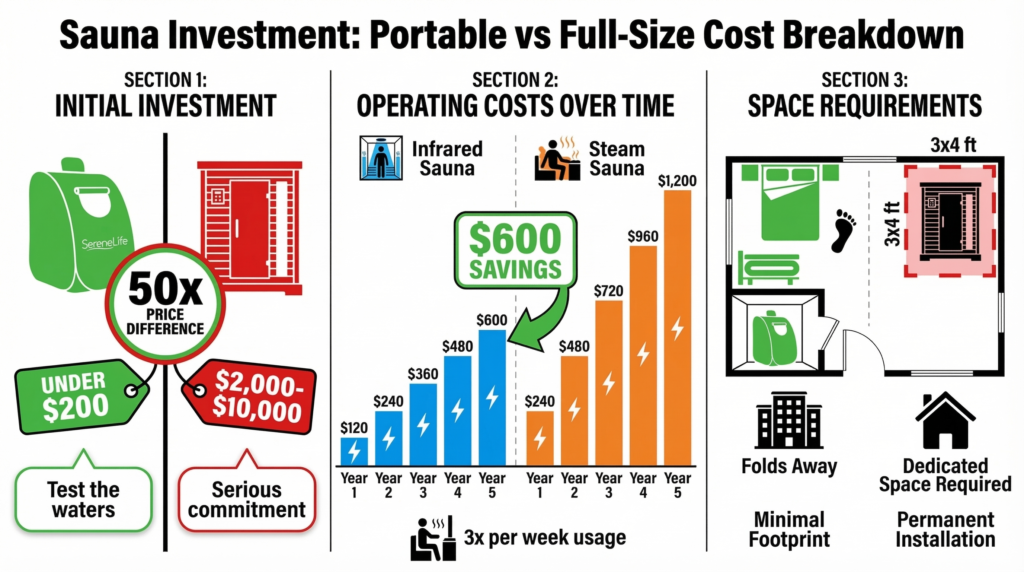
The upfront price gap is massive, but running costs over time narrow that gap somewhat.
Initial Investment
SereneLife SLISAU35BK: **under $200*
Full-size infrared sauna: **$2,000 to $10,000** (mid-range around $8,000)
That’s not a small difference. That’s “test the waters cheaply” versus “commit serious money to wellness infrastructure.”
Operating Costs
Running an infrared sauna about 3x per week costs roughly $10 per month in electricity. A steam sauna running the same schedule costs over $20 per month.
Infrared costs less to operate because it heats up faster and runs at lower air temperatures, consuming less total energy per session.
Over 5 years, infrared costs around $600 to run while steam costs over $1,200. That’s a $600 difference in operating costs.
For the SereneLife specifically with its 1600-watt heater and shorter sessions, monthly costs would likely fall on the lower end depending on your electricity rates and how often you actually use it.
Browse full-size infrared sauna options here
Space Value
This is where the **slisau35bk portable steam home spa vs full size portable infrared sauna** comparison gets tricky because we’re actually comparing a portable steam unit to a full-size infrared unit.
The SereneLife takes up minimal space and folds away into a closet or under a bed. That’s huge for apartment living or small homes.
A full-size infrared sauna needs at least a 3×4 foot dedicated floor space. That’s a corner of a bedroom, a section of a basement, or a whole spare room.
For renters or anyone without extra space, that spatial difference often becomes the deciding factor regardless of performance or long-term cost.
Best For Different Users
Your living situation and how you plan to use the sauna matters way more than which technology is “better.”
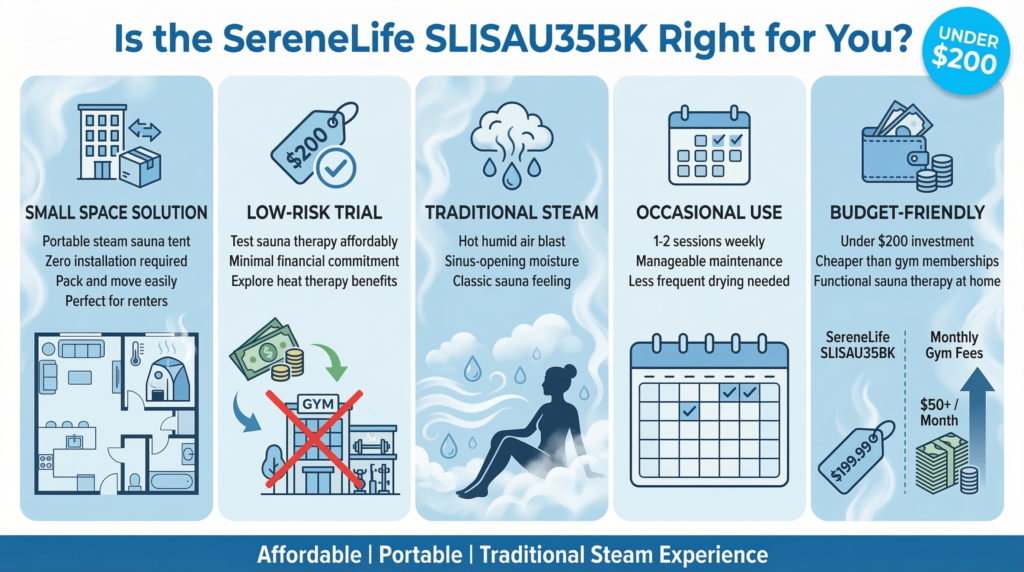
Get the SereneLife SLISAU35BK Steam Sauna If:
- **You live in an apartment or small space.** Renters especially benefit from the zero-installation portability. You can pack it up when you move.
- **You want to test sauna therapy without spending serious money.** At $200, you’re not risking much to see if regular heat exposure actually fits your recovery routine.
- **You like the traditional sauna experience.** That immediate blast of hot humid air and the sinus-opening moisture appeals to some people more than dry heat.
- **You use saunas sporadically.** If you’re hitting it once or twice a week, the daily drying maintenance becomes less burdensome. It’s annoying but manageable for occasional use.
- **Budget is your main constraint.** Under $200 gets you functional sauna therapy. That’s legitimately affordable compared to gym memberships with sauna access.
Get a Full-Size Infrared Sauna If:
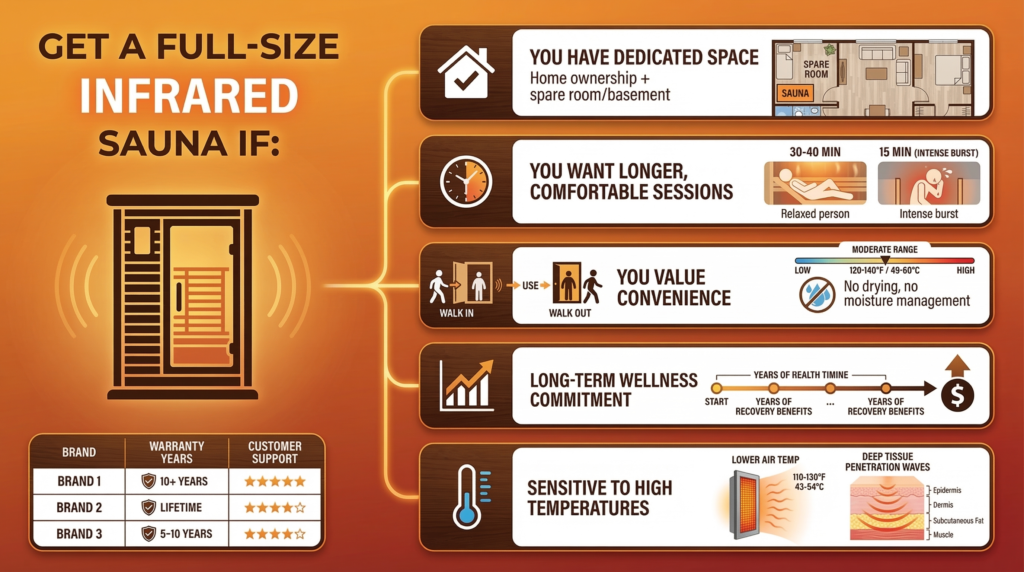
- **You have dedicated space and plan regular use.** If you own your home and have a spare room or basement corner, the permanent installation makes sense for frequent users.
- **You want longer, more comfortable sessions.** Those 30-40 minute sessions at moderate temperatures fit better into a wind-down routine than 15-minute intense bursts.
- **You value convenience and minimal maintenance.** No drying, no moisture management, just step in and step out. For daily users, this convenience difference justifies the cost.
- **You’re committed to long-term wellness investment.** If you’ve already confirmed that sauna use works for your recovery and you’re in this for years, the infrastructure investment pays off.
- **You’re sensitive to high temperatures.** Infrared’s lower air temperature with deep tissue effect works better for people who struggle with intense heat but still want the benefits.compare warranty and customer support across sauna brands
The Maintenance Factor Nobody Talks About
This deserves its own section because maintenance burden kills consistency for a lot of people.
Steam saunas create moisture. Every single session leaves water in the fabric enclosure.
You’re opening it up, wiping it down, making sure it dries completely, and monitoring for any mildew smell.
Over weeks and months of regular use, this becomes genuinely tedious. Some users report the maintenance burden eventually discouraged them from using the sauna as often as they planned.
The fabric can develop odors if you don’t stay on top of drying. That’s just the reality of moisture and heat in an enclosed space.
Infrared saunas stay dry. Your body sweats but no external moisture accumulates in the wood cabin. Occasional wiping is your only real maintenance.
Maybe you condition the wood annually depending on the model.
Compared to steam’s moisture management, the difference is night and day.
If you’re planning 3+ sessions per week, the maintenance difference alone might justify spending more on infrared despite the massive upfront cost gap.
Final Recommendation: Which One Actually Makes Sense
The whole **slisau35bk portable steam home spa vs full size portable infrared sauna** comparison comes down to two things: your space situation and your commitment level.
Start with the SereneLife if you’re testing sauna therapy, live somewhere without space for permanent fixtures, or need to stay under $200. The worst case is you spent less than $200 on equipment you use occasionally.
The best case is you discovered a recovery tool that works for you at minimal financial risk.
You can always upgrade later if you confirm regular sauna use fits your life.
Commit to full-size infrared if you’ve already validated that sauna therapy works for you, you own your space, and you have room for a permanent installation. The longer sessions, deeper tissue penetration, and minimal maintenance justify the investment for frequent users.
Over 5 years of regular use, the total cost difference shrinks when you factor in operating costs and equipment longevity. An $8,000 infrared unit used 3-4 times per week delivers significantly more value than a $200 steam unit that collects dust because the maintenance is annoying.
The middle path works well: start cheap, validate the habit, then upgrade. The SereneLife serves as an effective testing ground before you drop serious money on permanent recovery infrastructure.
Most people overthink the technology differences. Both produce heat, both make you sweat, both deliver cardiovascular stress that comes with raising body temperature.
The practical differences in space requirements, setup complexity, maintenance burden, and session comfort matter way more than the heating mechanism.
Choose based on your actual living situation and realistic assessment of how often you’ll use it. The best sauna is the one you actually use consistently, not the one with superior specs sitting in your basement unused.
check current SereneLife SLISAU35BK prices
Or use our Portable Infrared Sauna Buyers Tool To Get The Right One For You!
You May Be Interested In These Articles As Well:
- Transform Your Wellness Routine With A 1-4 Person Solstice Portable Infrared Sauna Review
- Sun Home Saunas Review: Complete Analysis
- SereneLife Portable Infrared Sauna Kits Review: Features, Pros, and Cons
- HeatWave Portable Infrared Sauna Kits: A Quality Review & Analysis
- SereneLife Review: Complete Analysis
- Durasage Portable Infrared Sauna Kits Review: Is It Worth the Investment?
- Affordable SLISAU35BK Portable Infrared Home Spa Review
- Radiant Saunas Review (2026): 8 Key Features, Pros and Cons
- Portable Far Infrared Sauna with Chair Review: 7 Things to Know Before Buying (2026 Guide)
- HeatWave Saunas Review: Complete Analysis (2026 Buyer’s Guide)
- Portable Far Infrared Sauna Review: In-Depth Analysis (2026 Buyer’s Guide)
- Durasage Review: Complete Analysis (Is It Worth It in 2026?)
This guide provides educational information for selecting portable infrared sauna kits. Some links may be affiliate links, meaning this site may earn commissions on purchases at no additional cost to you.
Disclaimer: The wellness benefits described are based on general research and user experiences. Individual results may vary as these are only opinions. Consult with a healthcare professional before beginning any new wellness routine, especially if you have pre-existing medical conditions, are pregnant, or take medications. Infrared sauna use is not intended to diagnose, treat, cure, or prevent any disease.